
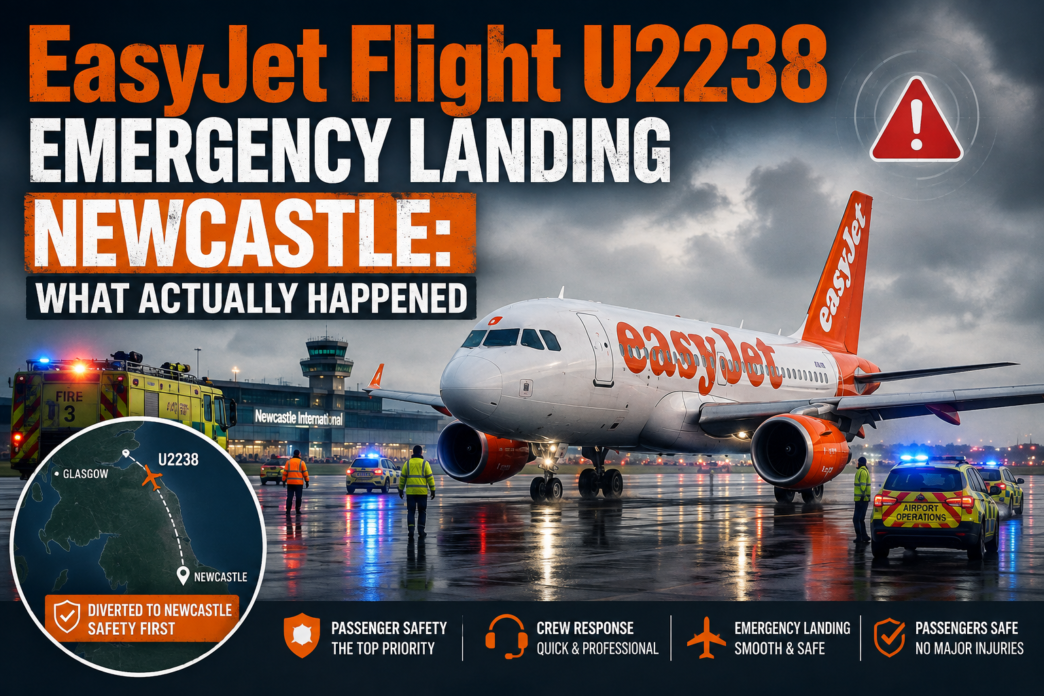
A flight number can spark a wave of online confusion faster than the incident itself ever could, and that is precisely what happened here. Reports about an “EasyJet flight U2238 emergency landing in Newcastle” spread quickly, but the real story belongs to flight EZY2238 (also listed as U22238), an Airbus A320 travelling from Copenhagen to Manchester on 27 October 2025.
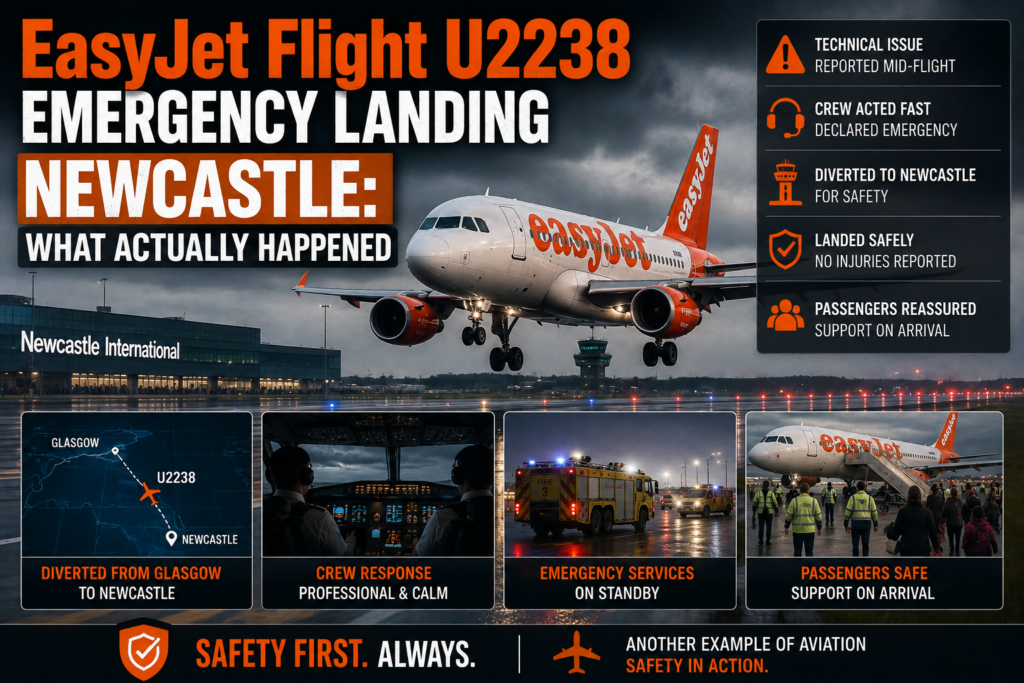
Shortly after departure, a passenger on board became seriously unwell, and the crew made the decision to divert rather than continue to the original destination. The aircraft, registration G-EZPB, squawked the international emergency code 7700 and turned toward Newcastle International Airport, the nearest suitable runway with medical support on standby. This article breaks down the timeline, explains why the diversion happened, and separates verified facts from the confusion that followed online, all in plain and simple language.
A Medical Emergency, Not a Mechanical Fault
The single biggest misunderstanding around this event is the word “emergency” itself. Many readers assume it means engine trouble or structural damage, but that was never the case here. The diversion happened purely because a passenger needed urgent medical care that could not safely wait until the plane reached Manchester. No fault was found with the aircraft at any stage.
Quick Crew Response Over the North Sea
Roughly 30 minutes after leaving Copenhagen, cabin crew noticed the affected passenger’s condition worsening and alerted the flight deck without delay. The pilots assessed the situation, weighed the aircraft’s position, weather, and nearby airport options, and chose to head for Newcastle instead of pressing on. That kind of fast, layered decision-making is exactly what regular emergency training is designed for.
Squawk 7700 and Priority Handling
Once the crew confirmed the diversion, they set the transponder to code 7700, the universal signal telling air traffic control that a flight needs immediate priority. Controllers cleared the way for a direct approach into Newcastle, which meant the aircraft avoided normal queueing and delays that could have cost precious time for the unwell passenger.
A Coordinated Ground Response
By the time the A320 touched down safely, ambulance crews and airport emergency teams were already positioned near the runway. This kind of readiness does not happen by chance; it comes from advance warning passed along by air traffic control the moment the emergency code was received, giving ground staff time to prepare before the plane even landed.
The Flight Continued to Manchester
Once paramedics had taken the passenger off the aircraft and into proper care, the remaining travellers were not left stranded in Newcastle. After a short stop for refuelling and routine checks, the same aircraft took off again and completed its journey to Manchester later that evening, arriving only a little later than originally planned.
The U2238 vs EZY2238 Mix-Up
A separate but genuinely scheduled EasyJet service, U2238, runs between Newcastle and Bristol and had nothing to do with this event. Because the numbers look so similar, several websites mistakenly attached the Copenhagen-Manchester diversion to the wrong flight code, which is why searches for “U2238” and “EZY2238” both turn up the same story.
Passenger Experience Onboard
Several travellers later described a tense but calm cabin atmosphere. Crew members gave regular updates, which helped ease nerves even though nobody on board knew exactly what was happening at first. That steady communication is often what people remember most clearly once the flight is over, more than the diversion itself.
Frequently Asked Questions
Was flight U2238 involved in a crash or serious accident? No. The aircraft landed safely and under full control at Newcastle. There were no injuries to other passengers or crew, and no damage was reported. The word “emergency” here refers to priority handling requested for medical reasons, not a crash or near-miss.
Why did the plane land in Newcastle instead of continuing to Manchester? Newcastle was the closest suitable airport with the facilities to receive a diverted flight and get medical help to the passenger quickly. Continuing toward Manchester would have added extra flying time that the crew judged the passenger could not safely afford.
Did passengers receive compensation for the delay? Diversions caused by genuine medical emergencies are generally treated as extraordinary circumstances under UK and EU air passenger rights rules, which typically means airlines are not required to pay standard delay compensation. Passengers with specific concerns should check directly with EasyJet’s customer service for guidance on their individual booking.
Conclusion
Strip away the confusing flight numbers and dramatic headlines, and the EasyJet flight U2238 (EZY2238) emergency landing in Newcastle turns out to be a clear example of aviation safety systems working the way they are supposed to.
A passenger needed urgent help, the crew recognised it immediately, and every step that followed, from the emergency code to the waiting ambulances, existed specifically to get that person proper care as fast as possible. Nobody was hurt, the aircraft was never at risk, and the flight resumed its journey within a matter of hours. If anything, the incident is a reminder that emergency procedures in commercial aviation are built for exactly these moments, and when they are followed correctly, they simply do their job quietly and effectively.

